
The electric vehicle industry is entering an exciting phase of innovation and growth. From advanced batteries and faster charging to connected vehicles and autonomous driving, the Future of Electric Vehicles is being shaped by rapid technological developments and changing consumer expectations.
In 2026, electric mobility is no longer limited to replacing petrol and diesel vehicles. Automakers, technology companies, battery manufacturers, charging providers, and component suppliers are working together to create a smarter, more connected, and sustainable transportation ecosystem. The Future of Electric Vehicles: Trends Shaping the EV Industry in 2026
The Growing Future of Electric Vehicles
The global automotive industry is increasingly investing in electrification. New electric cars, buses, two-wheelers, commercial vehicles, and specialized mobility solutions are entering the market, giving consumers more choices.
The Future of Electric Vehicles will depend on several important factors, including battery performance, vehicle range, charging infrastructure, affordability, software, safety, and manufacturing efficiency.
As these technologies continue to improve, EVs are expected to become an increasingly important part of everyday transportation.
1. Advanced EV Battery Technology
Battery technology remains one of the most important areas of development in the EV industry. Manufacturers are working to improve energy density, charging speed, durability, safety, and overall battery life.
Lithium-ion batteries continue to dominate the market, while new technologies such as solid-state batteries are attracting significant attention. These developments could potentially provide greater driving range, improved safety, and faster charging.
Battery Management Systems (BMS) are also becoming increasingly sophisticated. Modern BMS technology helps monitor battery temperature, voltage, charging conditions, and overall performance.
2. Smarter and Faster Charging Infrastructure
Charging infrastructure is another major factor influencing EV adoption. Drivers want charging stations that are convenient, reliable, and fast.
The development of high-power DC fast chargers is helping reduce charging times, while smart charging technologies can optimize energy consumption and charging schedules.
Wireless charging, vehicle-to-grid (V2G) technology, and home energy management are also expected to contribute to the development of a more connected charging ecosystem.
For the EV Industry Trends 2026, charging infrastructure will remain a major area of investment and innovation.
3. ADAS and Autonomous Driving
Advanced Driver Assistance Systems (ADAS) are becoming increasingly common in modern vehicles. Technologies such as cameras, radar, LiDAR, sensors, and artificial intelligence can assist drivers with functions such as lane keeping, adaptive cruise control, parking assistance, and collision avoidance.
As EVs become more software-driven, manufacturers have greater opportunities to integrate advanced digital technologies into vehicles.
Although fully autonomous driving is still developing, ADAS represents an important step toward the future of intelligent transportation.
4. Connected Electric Vehicles
Modern vehicles are becoming connected digital platforms rather than simply transportation machines. Cloud connectivity, IoT, artificial intelligence, and over-the-air software updates are transforming the driving experience.
Connected EVs can provide real-time vehicle information, remote diagnostics, navigation updates, charging information, and software improvements.
This development demonstrates how Electric Vehicle Technology is expanding beyond batteries and motors into software, data, connectivity, and artificial intelligence.
5. Innovation in Electric Powertrains
Electric powertrains are continuing to evolve. Improvements in motors, inverters, power electronics, and thermal management systems are helping manufacturers improve vehicle efficiency and performance.
Silicon carbide (SiC) and gallium nitride (GaN) technologies are also attracting attention because of their potential applications in high-efficiency power electronics.
More efficient powertrains can help manufacturers achieve better range and performance while reducing energy consumption.
6. The Rise of Automotive Semiconductors
Semiconductors are becoming increasingly important to modern vehicles. Electric vehicles use electronic systems for battery management, power conversion, connectivity, infotainment, safety, and driver assistance.
As vehicles become more connected and automated, demand for automotive-grade semiconductor technology is expected to continue growing.
This makes semiconductor manufacturing and automotive electronics an important part of the broader EV Technology Trends shaping the industry.
7. Sustainable EV Manufacturing
The environmental benefits of electric vehicles depend not only on how they are driven but also on how they are manufactured.
Automakers and suppliers are exploring ways to reduce manufacturing emissions, improve battery recycling, use renewable energy, and recover valuable materials from end-of-life batteries.
Battery recycling and second-life applications could become increasingly important as the number of EV batteries reaching the end of their initial vehicle life grows.
8. Electric Mobility Beyond Passenger Cars
The transition toward electrification extends far beyond passenger vehicles. Electric buses, commercial vehicles, delivery vans, motorcycles, scooters, and other mobility solutions are gaining attention.
Electric commercial transportation could play an important role in reducing operating costs and emissions, particularly in urban environments.
These developments are contributing to broader Electric Mobility Trends, where different forms of transportation are becoming increasingly connected and electrified.
9. The Future of Electric Vehicles: Trends Shaping the EV Industry in 2026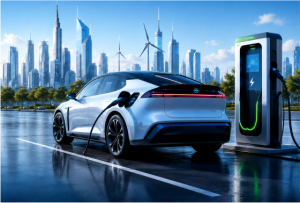
India has significant potential in the global electric mobility market. The country is seeing increasing activity across EV manufacturing, battery technology, charging infrastructure, automotive components, software, and mobility services.
The development of a strong domestic supply chain could help support the expansion of India’s EV ecosystem while creating opportunities for manufacturers, technology providers, startups, and component suppliers.
Industry exhibitions and technology events can play an imp
ortant role by bringing these stakeholders together and creating opportunities for collaboration and knowledge sharing.
What’s Next for the EV Industry?
The next stage of EV development will be driven by the combination of hardware and software. Batteries, charging systems, electric powertrains, semiconductors, AI, connectivity, and autonomous technologies will increasingly work together.
The most important EV Industry Trends 2026 are therefore not isolated developments. They represent parts of a much larger transformation in the automotive industry.
Businesses that invest in innovation, efficient manufacturing, sustainable technologies, and connected mobility will be better positioned to participate in this transformation.
Conclusion
The Future of Electric Vehicles is moving toward greater efficiency, connectivity, intelligence, and sustainability. Advances in batteries, charging infrastructure, ADAS, powertrains, semiconductors, IoT, and software are creating new possibilities for the automotive industry.
As these technologies continue to mature, electric mobility will become increasingly integrated into the wider transportation ecosystem. For manufacturers, suppliers, technology companies, and industry professionals, 2026 represents an important period of opportunity and innovation.
Auto EV Show provides a platform for the automotive and EV ecosystem to discover emerging technologies, connect with industry professionals, and explore the innovations shaping the next generation of electric mobility
Frequently Asked Questions (FAQs)
1. What is the future of electric vehicles?
Ans. The future of electric vehicles is expected to focus on longer driving ranges, faster charging, improved battery technology, connected features, advanced safety systems, and greater integration of artificial intelligence and autonomous driving.
2. What are the major EV industry trends in 2026?
Ans. Key EV Industry Trends 2026 include advanced battery technology, fast-charging infrastructure, connected vehicles, ADAS, electric powertrain improvements, automotive semiconductors, and sustainable manufacturing.
3. How is electric vehicle technology improving?
Ans. Electric Vehicle Technology is improving through developments in batteries, electric motors, power electronics, charging systems, software, connectivity, and thermal management. These innovations are helping improve EV efficiency, performance, safety, and range.
4. Why is EV charging infrastructure important?
Ans. Reliable charging infrastructure is essential for wider EV adoption. Faster public chargers, home charging, smart charging, and vehicle-to-grid technologies can make electric mobility more convenient for consumers and businesses.
5. What are the latest electric mobility trends?
Ans. Current Electric Mobility Trends include the growth of electric cars, buses, commercial vehicles, two-wheelers, smart charging, connected mobility, battery recycling, and integrated transportation solutions.

Written by Auto EV Show
Contributor at Autoev show.