

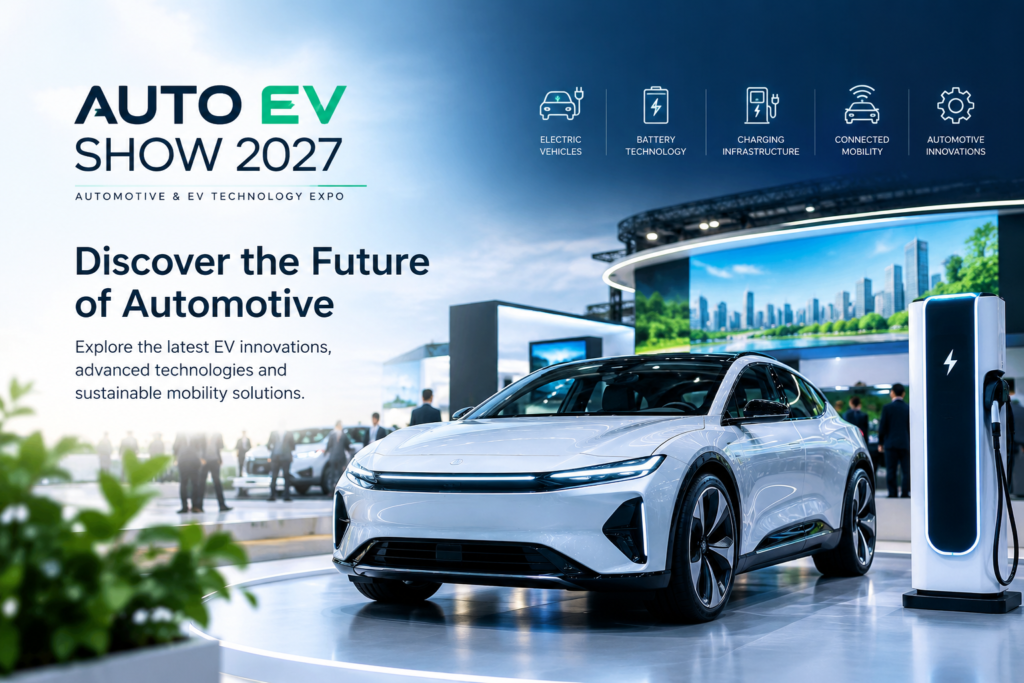
The electric vehicle industry is moving into a new phase in 2026. Improvements in batteries, charging infrastructure, vehicle software, artificial intelligence, power electronics and connected technologies are changing how electric vehicles are designed, manufactured and used.
The latest EV Technology Trends show that the industry is no longer focused only on increasing driving range. Automakers and technology companies are also working to make EVs charge faster, operate more efficiently, connect with digital ecosystems and deliver more intelligent driving experiences.
According to the International Energy Agency (IEA), global electric car sales exceeded 20 million in 2025, with electric vehicles representing around one-quarter of new car sales worldwide. The IEA expects global electric car sales to reach around 23 million in 2026, although growth differs significantly between regions.
Here are seven important innovations shaping the Future of electric vehicles in 2026.

1. Next-Generation EV Battery Technology
Battery technology remains at the centre of electric vehicle development.
Modern EV manufacturers are looking beyond simply increasing battery capacity. The focus is increasingly on improving energy density, charging speed, durability, cost and thermal management.
EV battery technology is developing through improvements in battery chemistry, cell design, battery-pack architecture and manufacturing processes.
The IEA reports that EV battery deployment reached around 1.2 TWh in 2025, nearly 30% higher than in 2024. Average EV battery-pack energy density has also increased substantially over the past decade while battery costs have fallen significantly.
What this means for EVs
Future battery systems are expected to provide:
- Faster charging
- Better energy efficiency
- Longer battery life
- Improved thermal management
- Greater driving range from the same vehicle footprint
- Potentially lower vehicle costs
High-voltage battery architectures are another major development. The IEA notes that 1,000-volt EV models appeared in 2025, while several manufacturers introduced technologies designed to enable extremely fast charging.
2. Ultra-Fast EV Charging Technology
Charging speed is one of the most visible areas of innovation in the EV industry.
Traditional charging infrastructure is increasingly being supplemented by fast and ultra-fast charging systems capable of delivering much higher power.
In 2025, the global number of public charging points exceeded 7 million, following the addition of almost 1.8 million public chargers during the year. The IEA also reports that the average speed of public charging infrastructure increased as fast and ultra-fast chargers became a larger part of the network.
Some next-generation charging systems are pushing power levels far beyond conventional fast chargers. In 2026, technologies reaching the megawatt range are being introduced for selected applications.
Why faster charging matters
Faster EV charging technology can help reduce charging stops during long journeys and make electric vehicles more convenient for drivers who cannot rely on overnight home charging.
The development of charging technology is also closely connected to battery chemistry, vehicle voltage and power electronics. A vehicle needs to be capable of accepting high charging power before it can benefit fully from an ultra-fast charger.
3. AI-Powered Electric Vehicles
Artificial intelligence is becoming increasingly important in modern vehicles.
EVs provide a strong platform for software-driven features because electric powertrains have fewer mechanical components and can be closely integrated with digital control systems.
AI can support areas such as:
- Advanced driver assistance
- Predictive maintenance
- Energy management
- Route optimisation
- Battery temperature management
- Intelligent charging
- Voice-based vehicle controls
- Personalised driving settings
The IEA’s 2026 EV technology analysis highlights the growing importance of software and artificial intelligence in automotive technology.
Instead of treating software as a secondary feature, automakers are increasingly designing vehicles as connected computing platforms that can receive software updates and introduce new functions throughout the vehicle’s lifecycle.
4. Vehicle-to-Grid and Bidirectional Charging
Another important development is the ability for an EV to do more than simply consume electricity.
With bidirectional charging, compatible vehicles can potentially send stored electricity back to a home, building or electricity grid.
This creates several possible applications:
Vehicle-to-Home (V2H)
An EV battery can potentially provide electricity to a home during certain periods, helping households manage energy use.
Vehicle-to-Grid (V2G)
EVs can potentially interact with the electricity grid by supplying electricity when needed and charging when demand is lower.
Vehicle-to-Load (V2L)
Some vehicles can use their batteries to power external electrical equipment.
As EV adoption increases, these technologies could make vehicle batteries an increasingly important part of the wider energy system.
5. Software-Defined Vehicles
One of the biggest changes in automotive technology is the transition towards software-defined vehicles.
In a software-defined vehicle, software plays a much larger role in controlling and improving vehicle functions.
Instead of relying entirely on hardware changes, manufacturers can use software updates to improve features and introduce new capabilities.
Potential applications include:
- Improved energy management
- Driver-assistance updates
- Infotainment improvements
- Battery optimisation
- Connected services
- Remote diagnostics
- Personalised vehicle settings
This approach can also allow manufacturers to continue improving a vehicle after it has been delivered to the customer.
For EV manufacturers, software is particularly important because the vehicle’s battery, motor, charging system and energy-management systems can all be closely integrated.
6. More Efficient Electric Motors and Power Electronics
Electric motors are already highly efficient, but engineers continue to improve their performance.
New motor designs, improved inverters and advanced power electronics can help reduce energy losses and improve the overall efficiency of an EV.
Higher-voltage architectures are particularly important because they can enable higher charging power while managing current more effectively.
The IEA notes that developments in power-electronics materials, battery cells and battery-pack architecture are supporting more efficient and faster-charging EV systems.
For drivers, better efficiency can translate into:
- More usable range
- Lower energy consumption
- Improved acceleration
- Better thermal performance
- Faster charging
- More efficient use of battery capacity
7. Smarter and More Connected EV Ecosystems
The future of electric vehicles extends beyond the car itself.
EVs are becoming part of connected ecosystems involving charging networks, smartphones, homes, renewable energy systems and cloud-based services.
A connected EV can communicate with charging infrastructure, navigation systems and digital platforms to help optimise charging and energy use.
For example, an EV could potentially determine the most suitable time to charge based on:
- Electricity prices
- Battery state of charge
- Driver’s planned journey
- Charging-station availability
- Grid demand
- Renewable energy availability
This integration can make EV ownership more convenient while helping drivers manage energy consumption.
Electric Vehicle Market 2026: Where Is the Industry Heading?
The electric vehicle market 2026 is becoming increasingly diverse.
According to the IEA, global electric car sales exceeded 20 million in 2025, while the organisation projects around 23 million electric car sales in 2026. That would represent approximately 28% of total global car sales.
However, EV adoption is developing differently across markets.
China remains a major centre of EV adoption and manufacturing. Europe is also experiencing significant growth, while emerging markets are increasingly contributing to global EV sales.
The IEA expects electric car sales in Asia-Pacific markets outside China to grow by more than 50% in 2026, while Latin American sales are projected to rise by around 45%.
India and other emerging markets are also becoming increasingly important as more affordable electric vehicles and electric two- and three-wheelers enter the market.
What Does the Future of Electric Vehicles Look Like?
The Future of electric vehicles will not depend on one single breakthrough.
Instead, several technologies are developing together.
Better batteries can improve range and charging performance. Faster charging can make EVs more practical for long-distance travel. AI and software can improve the driving experience, while bidirectional charging can connect vehicles with homes and electricity grids.
At the same time, growing charging infrastructure will be essential to support a larger EV fleet.
The IEA estimates that more than 43 million private light-duty charging points were already in place globally in 2025, while public charging infrastructure exceeded 7 million points.
This combination of vehicles, batteries, charging infrastructure and software is creating a broader electric mobility ecosystem.
Why EV Technology Trends Matter for the Automotive Industry
For manufacturers, suppliers and technology companies, these developments are creating new opportunities across the automotive value chain.
The industry is seeing innovation in:
- Battery manufacturing
- EV charging infrastructure
- Power electronics
- Electric motors
- Automotive software
- Artificial intelligence
- Autonomous driving technologies
- Connected mobility
- Energy management
- Vehicle-to-grid systems
This means the EV industry is increasingly becoming a combination of automotive engineering, energy technology and digital technology.
Conclusion
The EV Technology Trends of 2026 show an industry moving beyond the basic transition from petrol and diesel engines to electric motors.
The next stage is about creating EVs that are faster to charge, more efficient, smarter, more connected and better integrated with the energy system.
From next-generation EV battery technology and ultra-fast charging to AI-powered software and bidirectional energy systems, these innovations are helping shape the Future of electric vehicles.
As the electric vehicle market 2026 continues to expand, manufacturers, technology companies, charging providers and industry professionals will play an important role in determining how quickly these technologies move from development into everyday use.
The transformation of mobility is already underway—and the technologies being developed today will influence the vehicles, charging networks and transportation systems of tomorrow.
FAQs
1. What are the major EV technology trends in 2026?
Major trends include advanced battery technology, ultra-fast charging, AI-powered vehicles, bidirectional charging, software-defined vehicles, improved electric motors and connected EV ecosystems.
2. What is the latest development in EV battery technology?
Battery development is focusing on higher energy density, faster charging, improved durability, better thermal management and lower costs. High-voltage battery architectures are also enabling faster charging.
3. How is EV charging technology improving?
Charging networks are expanding while fast and ultra-fast chargers are becoming more common. New high-power charging systems are being developed to significantly reduce charging times.
4. How big is the electric vehicle market in 2026?
The IEA projects around 23 million electric car sales globally in 2026, representing approximately 28% of total car sales.
5. What will shape the future of electric vehicles?
Battery innovation, charging infrastructure, artificial intelligence, vehicle software, energy integration and connected technologies are expected to play major roles in the continued development of EVs.
Suggested SEO keywords:
Primary: EV Technology Trends
Secondary: Future of electric vehicles, EV battery technology, EV charging technology, Electric vehicle market 2026
Suggested meta description:
Explore 7 major EV Technology Trends shaping electric vehicles in 2026, from advanced batteries and ultra-fast charging to AI and connected mobility.
Read more
1.Electric Vehicle Expo India: What to Expect
2.The Future of Electric Vehicles: Trends Shaping the EV Industry in 2026
3.Auto EV Show 2027 Discover the Future of Automotive
4.7 Reasons to Visit Auto EV Show 2027 in India

Written by Auto EV Show
Contributor at Autoev show.