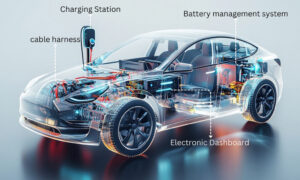

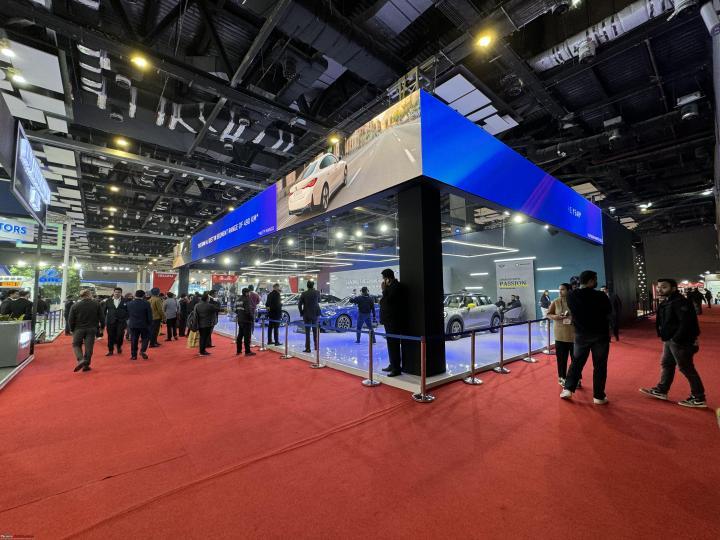
A vehicle may perform perfectly during a short road test and still fail under extreme heat, repeated vibration, electromagnetic interference or battery stress. For automotive manufacturers, identifying these problems before production is essential to developing reliable vehicles.
An automotive testing exhibition in India brings attention to the equipment, engineering methods and validation technologies used to identify these risks. From battery abuse testing to hardware-in-the-loop simulation, automotive testing is becoming more complex as vehicles adopt electric powertrains, advanced electronics and connected systems.
For OEMs, Tier 1 suppliers, testing laboratories and R&D professionals, Auto EV Show 2027 in Pune offers an opportunity to explore testing and simulation solutions alongside other automotive technologies.
Here are seven important developments worth understanding before attending.
1. EV Battery Testing Is Moving Beyond Basic Performance
Battery testing is no longer limited to checking capacity, charging speed and cycle life. Manufacturers must also evaluate how battery packs respond to mechanical stress, electrical faults and changing temperatures.
EV battery testing solutions can help engineers investigate:
- Thermal runaway and abnormal temperature behaviour
- Overcharging, over-discharging and short-circuit conditions
- Vibration and mechanical shock resistance
- Battery Management System (BMS) fault detection
- Cell balancing, energy efficiency and degradation
India’s AIS-156 and AIS-038 (Revision 2) standards include important requirements relating to electric vehicle battery safety.
For testing equipment manufacturers, this creates a technically demanding market where measurement accuracy, repeatability and appropriate safety controls matter.
2. Hardware-in-the-Loop Testing Is Changing Development
Modern vehicles contain electronic control units responsible for braking, steering assistance, powertrain management and battery operation.
Testing every software change in a physical vehicle can be expensive and time-consuming.
Hardware-in-the-loop (HIL) testing connects a real controller to a simulated vehicle environment. Engineers can reproduce sensor signals, driving conditions and selected fault scenarios without requiring a complete vehicle for every test Automotive testing equipment India.
This approach is particularly useful for:
- Battery management controllers
- Motor control units
- Vehicle control units
- Regenerative braking functions
- Fault detection and safety logic
At an automotive testing exhibition in India, engineering teams should look beyond simulation software demonstrations and ask how a testing platform integrates with existing controllers, communication networks and development workflows.
3. Automotive Testing Equipment Is Becoming More Integrated
Testing laboratories often operate several instruments independently. A vehicle development programme may require data from dynamometers, environmental chambers, electrical analysers and vibration testing systems.
Modern testing platforms increasingly focus on connecting these systems through shared data acquisition, automated test sequences and centralised reporting.
When evaluating automotive testing equipment India suppliers, buyers should consider five practical questions:
- Can the equipment communicate with existing laboratory instruments?
- Does the software support automated test sequences?
- How are measurements calibrated and verified?
- Can test data be exported into existing engineering systems?
- What local installation, training and maintenance support is available?
The most suitable equipment is not necessarily the system with the largest feature list. It is the system that delivers reliable measurements within the laboratory’s actual operating requirements Automotive testing equipment India.
4. Vehicle Testing and Validation Must Reflect Indian Conditions
A vehicle developed for one market may face very different operating conditions in another.
In India, manufacturers must account for high ambient temperatures, monsoon conditions, traffic congestion, variable road surfaces and demanding operating cycles.
Effective vehicle testing and validation therefore requires a combination of laboratory assessment and real-world evaluation.
| Testing area | What engineers investigate |
|---|---|
| Thermal testing | Component behaviour at high and low temperatures |
| Vibration testing | Durability under repeated mechanical loads |
| Water ingress testing | Protection of electrical and electronic components |
| Chassis dynamometer testing | Vehicle performance and energy consumption |
| EMC testing | Electromagnetic emissions and immunity |
| Durability testing | Reliability under repeated operating cycles |
These assessments help manufacturers identify design weaknesses before vehicles enter large-scale production.
5. ADAS Testing Requires More Complex Validation
Advanced Driver Assistance Systems (ADAS) rely on cameras, radar, sensors and software to interpret the surrounding environment.
Testing these systems involves more than verifying that an individual sensor works.
Engineers must evaluate how the complete system responds to different driving situations, including low visibility, unexpected obstacles and sensor limitations Automotive testing equipment India.
Important testing methods include:
- Sensor calibration and performance evaluation
- Scenario-based software simulation
- Sensor fusion testing
- Closed-track vehicle testing
- Controlled fault-injection testing
- Verification of warning and intervention behaviour
One of the important automotive testing technologies to investigate is scenario-based validation, where engineers systematically test predefined driving situations and evaluate the vehicle’s response.
For suppliers developing ADAS components, the ability to demonstrate repeatable results is an important part of technical credibility.
6. EV Powertrain Testing Is Becoming More Precise
Electric powertrains introduce testing requirements that differ from conventional internal combustion engine systems.
Motor efficiency, inverter performance, torque delivery, thermal behaviour and regenerative braking all influence vehicle performance.
Engineers use dynamometers and specialised measurement equipment to assess how these systems operate under different loads and speeds.
For example, a motor may achieve high efficiency under one operating condition but experience increased losses at another. Testing across a wider operating range helps engineers identify opportunities to improve control strategies and thermal management Automotive testing equipment India.
Manufacturers should also evaluate how the motor, inverter and battery interact as a complete system rather than testing each component in isolation.
7. Testing Data Is Becoming a Competitive Engineering Asset
A test report should do more than indicate whether a component passed or failed.
When engineers collect structured data throughout development, they can compare design revisions, identify recurring problems and understand how component behaviour changes over time.
Automated data acquisition, traceability and digital reporting can improve this process.
However, the usefulness of testing data depends on consistent procedures, reliable sensors and clear documentation.
A laboratory that cannot reproduce its results may struggle to distinguish a genuine product improvement from measurement variation.
For automotive businesses investing in testing infrastructure, data quality deserves as much attention as equipment capability.
Why Automotive Testing Standards Matter in India
Automotive testing supports product development, quality assurance and regulatory compliance.
India has established automotive testing and certification organisations, including the Automotive Research Association of India (ARAI) and the International Centre for Automotive Technology (ICAT).
Depending on the vehicle category and component, manufacturers may need to consider standards covering electrical safety, battery performance, electromagnetic compatibility and other technical requirements.
For example, AIS-156 addresses relevant safety requirements for certain electric vehicle categories, while AIS-038 (Revision 2) covers specific electric powertrain and rechargeable energy storage system requirements.
Manufacturers should confirm the applicable standards, amendments and certification procedures for their exact products rather than assuming one testing standard applies to every EV.
What to Look for at Auto EV Show 2027
Auto EV Show 2027 includes testing and simulation among its exhibition focus areas, alongside battery technologies, powertrains, automotive electronics and advanced mobility systems.
For professionals searching for an automotive testing exhibition in India, the event offers an opportunity to explore suppliers relevant to the testing and validation ecosystem.
Event details
Event: Auto EV Show 2027
Dates: 5–7 May 2027
Venue: Auto Cluster Exhibition Centre, Pimpri-Chinchwad, Pune, Maharashtra
Website: https://autoevshow.com/
Testing laboratories and engineering teams planning a visit should consider arranging discussions with relevant exhibitors in advance.
Questions to Ask Testing Equipment Suppliers
Before selecting a testing solution, ask suppliers about measurement accuracy, calibration traceability, supported standards, test automation capabilities and technical support.
It is also useful to request sample reports and discuss whether the equipment can accommodate future changes in vehicle technology.
A technically detailed supplier discussion can be more valuable than a general product presentation.
Who Should Attend?
The exhibition is particularly relevant to automotive and EV professionals working in:
- Vehicle research and development
- Product testing and homologation
- EV battery and BMS development
- Automotive electronics and embedded systems
- ADAS and connected vehicle engineering
- Laboratory equipment manufacturing
- Automotive quality assurance
- Component testing and certification
Businesses looking to showcase testing systems can also use the exhibition to engage with potential customers and technical decision-makers.
Conclusion
Automotive testing is becoming increasingly important as vehicle designs incorporate high-voltage batteries, software-controlled systems, advanced electronics and complex safety functions.
For engineering teams, the priority is not simply to conduct more tests. It is to select appropriate testing methods, generate reliable results and identify design problems earlier.
An automotive testing exhibition in India can help manufacturers, laboratories and technology providers discover relevant solutions and connect with organisations working on the next generation of vehicle development.
Explore Auto EV Show 2027 in Pune to learn more about automotive testing, simulation and electric mobility technologies.
Visit autoevshow.com for exhibition details and participation information Automotive testing technologies.
Frequently Asked Questions
Q1. What is an automotive testing exhibition in India?
Ans. It is an industry event where testing equipment manufacturers, laboratories, technology providers and automotive professionals can explore solutions for vehicle safety, performance, durability and regulatory validation.
Q2. Which automotive testing technologies are important for electric vehicles?
Ans. Important technologies include battery abuse testing, powertrain dynamometers, HIL simulation, electromagnetic compatibility testing, environmental chambers and BMS validation systems.
Q3. Which standards are relevant to EV battery testing in India?
Ans. AIS-156 and AIS-038 (Revision 2) are important Indian automotive standards relating to electric vehicle battery and electrical safety. Applicability depends on the vehicle category and the relevant regulatory requirements.
Q4.Who should visit Auto EV Show 2027 for testing solutions?
Ans. Automotive OEMs, EV manufacturers, R&D engineers, testing laboratories, quality assurance teams, component suppliers and certification professionals can benefit from exploring relevant exhibitors and technologies.
Q5. When and where is Auto EV Show 2027 taking place?
Ans. Auto EV Show 2027 is scheduled for 5–7 May 2027 at the Auto Cluster Exhibition Centre in Pimpri-Chinchwad, Pune, Maharashtra. Visitors should check the official website for event updates.
Read More….
1. Auto EV Show 2027 Discover the Future of Automotive
2. 7 Reasons to Visit Auto EV Show 2027 in India
3. EV Technology Trends 2026: 7 Innovations Shaping the Future of Electric Vehicles
4. Future of Electric Vehicles in India: Trends & Opportunities
5. Electric Vehicle Expo India 2027: 7 Reasons to Attend

Written by Auto EV Show
Contributor at Autoev show.